8 Smart Swaps for Sustainable Living That Cut Plastic Waste
Last year, my neighbor Marisol asked me to look at her recycling bin. It was overflowing, and she felt proud. I had to share something hard. Recycling alone is not winning this fight.
Here is the surprising part. Only 9 percent of plastic waste worldwide gets recycled. Nearly half goes to landfill (OECD Global Plastics Outlook, 2022).
This guide is for eco-conscious consumers who want to reduce plastic waste at home. Discover eight smart sustainable swaps and sustainable living tips that fit real life. Learn the research behind each one. Find out what to do first. You get real stories, honest trade-offs, a simple weekly plan, and an FAQ.
Ready to cut plastic at home? Click to discover simple eco friendly swaps you can start today.
Problem: Why Plastic Waste Keeps Piling Up in an Eco Friendly Home
You already care about eco conscious living. You carry a bag. You sort your trash. Yet plastic keeps arriving.
The numbers explain why. Global plastic waste more than doubled between 2000 and 2019, reaching 353 million tonnes. Plastics also cause 3.4 percent of global greenhouse gas emissions (OECD, 2022).
Single-use plastic keeps growing too. The Minderoo Foundation’s 2023 Plastic Waste Makers Index found 139 million tonnes in 2021, up from 133 million in 2019. That is almost one extra kilogram per person on Earth (Plastic Free Foundation summary).
In the United States, only 8.7 percent of plastic was recycled in 2018 (US EPA). So the first two words of “reduce, reuse, recycle” matter most.
In short: recycling cannot keep up, so smart swaps at home do real work.
Your turn: What plastic item do you struggle to avoid? Tell me in the comments.
Pain Points: Why Eco Friendly Swaps Fail (and How to Avoid It)
Even committed households hit the same walls on the road to a zero waste lifestyle:
- Believing the blue bin fixes everything. The OECD says 15 percent of plastic waste is collected for recycling, but 40 percent of that gets thrown out as residue (OECD).
- Hoarding “bags for life.” UK supermarkets sold 1.58 billion durable plastic bags in 2019, about 57 per household (CNN via KSL).
- Buying new cotton totes. A Danish government study said a cotton bag must be used thousands of times to beat a plastic one. A UNEP review found 50 to 150 uses on climate alone (same source).
- Drinking from single-use bottles. A 2024 study found about 240,000 plastic fragments per liter in tested brands (NPR/CT Public).
- Aiming for perfect. Perfect is not required. Progress is.
In short: the trap is buying new green stuff instead of reusing what you own.
Your turn: Which pain point have you hit? Share your story below.
Watch this video: 8 Smart Swaps for Sustainable Living That Will Transform Your Everyday Life!
Real-Life Stories: How Seven Households Built a Sustainable Lifestyle One Swap at a Time
Marisol, my neighbor. Her bin overflowed with water bottles. She bought one refillable bottle and filled it at home. Her bin is half empty now, and so is her stress about it.
Ben and Aiko, small-flat couple. They had little space and lots of bottles. They switched to bar soap and refills. Their bathroom looks calmer, and cleaning takes less time.
The Mensah family, four kids. Lunchboxes used to mean cling film and bags. Each child now owns a steel container. Packing takes minutes, and nobody loses a lid anymore.
Grace, retired teacher, 72. She buys no new bags. She reuses totes from her hallway drawer. Grace says shopping feels lighter without the clutter.
Kai, night-shift nurse. Kai grabbed disposable cups and cutlery on every shift. A small carry kit changed that. Kai now feels proud, not guilty, at the hospital cafeteria.
Tomás, dad of two. He microwaved leftovers in plastic tubs. After reading about particle release, he moved food into glass first. He sleeps easier about dinner.
Lena, new mom. She wanted to limit plastic around her baby. She switched baby food storage to glass jars. She feels more in control.
Your turn: Which household feels closest to yours? Share your first swap in the comments.
Exploration: The 8 Smart Swaps for Sustainable Living, Backed by Research
Here are eight simple eco-friendly changes that reduce single-use plastic. Think of them as ways to reduce waste and green home ideas. Each one comes with an honest look at the evidence. : zero waste tips for beginners
Swap 1: Reusable Shopping Bags Instead of Plastic Bags
The best alternatives to plastic bags are the ones you reuse often. A 2020 UNEP-backed review found a durable polypropylene bag needs about 10 to 20 uses to beat a single-use plastic bag. A thinner reusable polyethylene bag needs 5 to 10 (CNN via KSL).
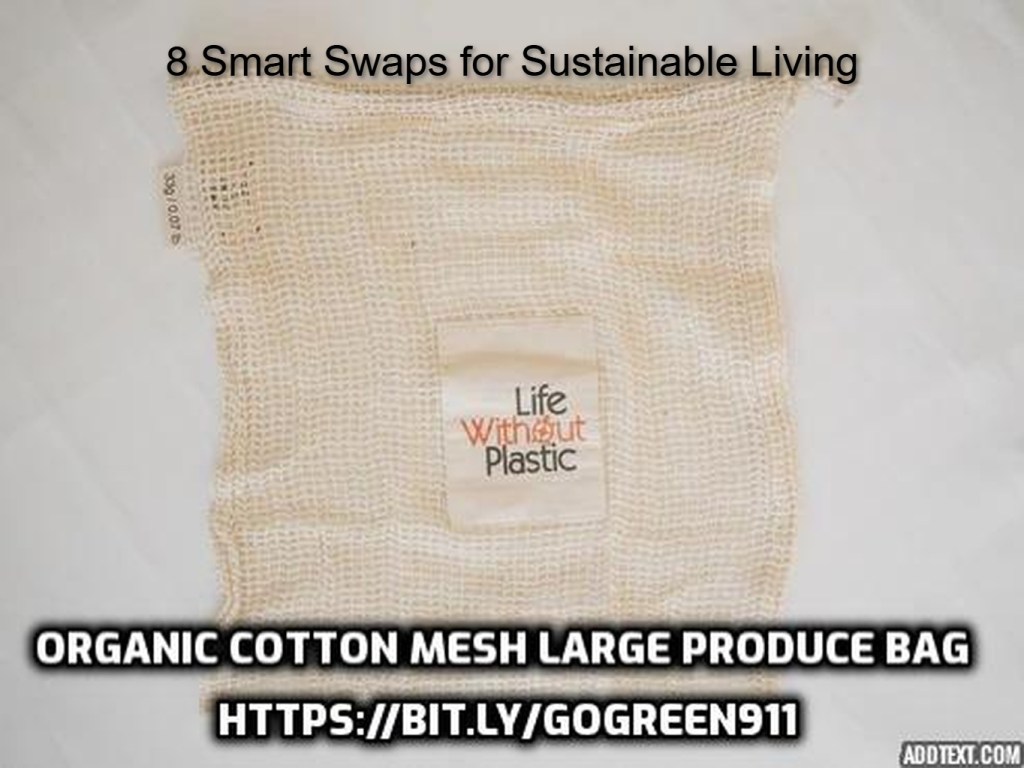
Swap 2: Reusable Produce Bags and Organic Cotton Bags
Skip the thin produce bags. Use mesh or cotton ones for years. The 2018 Danish study found organic cotton bags carry a higher footprint than non-organic ones. So use organic cotton bags as often as you can, and avoid printed designs (The Conversation).
Swap 3: Refillable Water Bottles Instead of Bottled Water
Columbia and Rutgers researchers (2024) found about 240,000 plastic fragments per liter in three bottled brands, mostly nanoplastics (CT Public). Health effects remain unclear, and tap water showed smaller amounts. Refillable water bottles cut both waste and exposure.
Swap 4: Reusable Food Containers in Glass or Steel
University of Nebraska-Lincoln researchers (Hussain et al., 2023) microwaved baby food containers for three minutes. Billions of nanoplastic particles came out per square centimeter. Lab-grown kidney cells died at high exposure levels (UNL). Glass and steel are eco friendly alternatives that avoid that issue.
Swap 5: A Carry Kit Instead of Disposable Cups and Cutlery
Pack a cup, fork, and spoon in your bag. Single-use plastic keeps rising worldwide (Minderoo, 2023). One small kit stops many throwaways. It is one of the easiest zero waste tips.
Swap 6: Bar Soap and Refills for Sustainable Household Products
Buy bar soap. Refill dish and hand soap in one bottle. This is a simple, sustainable shopping tip that cuts bottles at home. It also counts as green living tips anyone can follow.
Swap 7: Reuse First, Recycle Second
Only 9 percent of plastic is recycled worldwide (OECD). Enck, who has used one cotton tote for 20 years, says it is better to reuse plastic bags than rush to recycle them (CNN via KTVZ).
Swap 8: Use What You Own Before You Buy Green
The greenest bag is the one in your closet. Environmentally friendly habits start with what you own. Buying new reusable gear can backfire if you stop using it.
In short: carry, refill, store in glass, and reuse before you recycle.
Your turn: Which swap will you try first? Which one feels hardest?
Climax: Your 4-Week Plan for Easy Ways to Go Green
Here is the key moment. You do not need all eight swaps today. You need one habit per week. This plan shows how to live sustainably, one week at a time.
- Week 1: Carry. Keep a refillable water bottle, a tote you already own, and a cutlery kit by the door.
- Week 2: Store. Move leftovers into glass or steel. Never heat food in plastic.
- Week 3: Refill. Switch to bar soap and refill your dish and hand soap.
- Week 4: Audit. Check what you own before you buy anything new. Reuse before you recycle.
Track your progress. Count how many single-use items you skip each week. Small wins build everyday sustainable habits and planet friendly habits that last.
In short: one swap a week beats a big overhaul you drop.
Your turn: Which week will you start with? Tell me your plan below.
Want more everyday sustainable habits? Click to find easy ways to build a plastic-free routine, one swap at a time.
Conclusion: Key Takeaways from the 8 Smart Swaps for Sustainable Living
The 8 smart swaps for sustainable living work because they are small and repeatable. Every swap you make supports environmental protection and a calmer, greener home. Small sustainable consumer choices add up to an eco friendly lifestyle.
- Only 9 percent of plastic is recycled worldwide, so reduce and reuse first.
- Reuse the bags you own as many times as you can.
- Carry a refillable water bottle and a small cutlery kit.
- Store and heat food in glass or steel.
- Switch to bar soap and refills.
- Build one habit a week, not a perfect life overnight.
Think about it: What is one plastic item you could drop this week? What swap would you recommend to a friend? Drop your answers below.
Call to Action: Start Your Plastic-Free Living Plan Today
Don’t wait for a new year. Do these three things in the next 24 hours:
- Put a refillable bottle and a tote by your front door.
- Pick one plastic item to stop buying this week.
- Tell us in the comments which swap you chose.
Know an eco-minded friend? Share this post on Facebook, WhatsApp, or Instagram. : green living tips for every room
Frequently Asked Questions About Plastic-Free Living and Sustainable Swaps
Q1-What are the easiest sustainable swaps to start with?
Carry a refillable bottle, a tote you already own, and a small cutlery kit. These three stop the most daily throwaways.
Q2-Are reusable bags really better than plastic bags?
Yes, if you reuse them enough. A durable polypropylene bag needs about 10 to 20 uses to beat a single-use plastic bag (CNN via KSL).
Q3-How many times must I use a cotton bag?
A UNEP review put it at 50 to 150 uses for climate impact alone. A Danish government study found the number is far higher once other impacts count (same source). Use your cotton bags for years.
Q4-Is bottled water worse than tap water?
One 2024 study found about 240,000 plastic fragments per liter in bottled water. Tap water showed smaller amounts. Health effects are still unclear (CT Public).
Q5-Is it safe to microwave plastic containers?
Researchers found heating released large numbers of particles from baby food containers, and refrigeration released far fewer (ScienceAlert). Use glass or ceramic to heat food.
Q6-Is recycling enough?
No. Only 9 percent of plastic waste is recycled worldwide (OECD). Reduce and reuse first.
Q7-How do I start plastic free living on a budget?
Use what you own. Reuse bags, jars, and containers before buying anything new.
References
- OECD (2022). Global Plastics Outlook. Press release and key findings
- Earth.com. OECD findings summary
- Minderoo Foundation (2023). Plastic Waste Makers Index, via Plastic Free Foundation
- US EPA. Plastics: material-specific data
- CNN via KSL. How many times to reuse reusable bags (UNEP 2020 and Danish EPA 2018 studies)
- CNN via KTVZ. Reusable bag advice
- Thornton T, Deakin University. The Conversation
- Qian N, Min W, Yan B, et al. (2024). Nanoplastics in bottled water, PNAS, via CT Public
- Hussain KA, et al. (2023). Microplastics from plastic containers, Environmental Science & Technology. UNL news and ScienceAlert
For more reading on green living:
- Travel Sustainably: Benefits of Bamboo Utensils
- Why Bamboo Utensils Are Essential for Eco-Friendly Eating
- Switch to Bamboo Utensils for a Sustainable Future
- Why Bamboo Utensils Are Essential for Eco-Friendly Living
- Ultimate Guide to Sustainable Food Wraps
- Ditch Plastic Wrap: Embrace Vegan Wax Wraps Today
- Top 10 Reasons to Get A Stainless Steel Tumbler: Boost Your Hydration Game Anywhere
- Stainless Steel Tumbler: The Ultimate Guide to Sustainable Hydration
- Embrace Eco-Friendly Dining with the Stainless Steel Folding Spork
- Sustainable Shopping with Organic Cotton Flat-Bottom Bulk Bags
- The Benefits of Using Organic Cotton Mesh Bags for Storing Produce
- Beyond BPA: Why Choosing BPA-Free Stainless Steel Thermoses Matters
Click HERE to find reusable mesh bags and practical tools to reduce plastic in your routine