That Awkward Pause at the Checkout Counter
A friend of mine, I’ll call her Marianne, told me about the moment that finally changed her habits. She was at checkout, arms full of groceries, when the cashier asked, “Plastic or paper?” and she realized she’d answered “plastic” on autopilot for probably fifteen years straight. “I didn’t even think about it,” she told me. “It was just the default answer.”
That’s the thing about single-use plastic bags. Nobody consciously decides to keep using them forever. They just never get around to deciding not to.
Here’s a number that stopped Marianne cold, and it tends to stop most people. Americans throw away roughly 100 billion plastic bags every year, which works out to about 300 bags per person. Three hundred bags, used for an average trip of fifteen minutes each, from one person, in one year alone.
So, are you still using single-use plastic bags? If the honest answer is yes, this post is for you. Discover exactly why that default habit costs more than it seems, learn the real alternatives that make switching easy, and find out how to finally break the autopilot habit for good. Let’s have the conversation Marianne had with herself at that checkout counter.
The Problem: A Habit Running on Autopilot, Not on Purpose
Here’s what makes single-use plastic bags different from most bad habits. Nobody actively chooses them each time. They’re the default, sitting right there at checkout, requiring zero thought and zero effort. That’s exactly why they’re so persistent.
Psychologists who study habit formation point out that defaults are powerful precisely because they remove the moment of decision. You don’t weigh pros and cons at checkout. You just say “plastic” the way you’ve said it a thousand times before, the same way Marianne did.
The scale this produces is hard to grasp intuitively. A single bag, plastic, pulled off a roll in under a second, used for one short grocery trip. Multiply that by hundreds of millions of shoppers, year after year, and you get a genuinely enormous volume of plastic waste generated for a task that reusable alternatives handle just as well, indefinitely.
This isn’t about guilt. It’s about noticing a default that’s been running unquestioned for years, and deciding, on purpose, whether it still deserves your “yes.”
Be honest with yourself for a second: when’s the last time you actually thought about your answer at checkout, instead of giving it automatically? I’d love to hear in the comments.
Click HERE to find reusable mesh bags and practical tools that make breaking the plastic-bag autopilot habit effortless.
The Pain Points: Why This Default Is So Hard to Break
If you’ve thought about ditching single-use plastic bags before but never quite followed through, here’s what usually gets in the way:
- The habit is automatic, not intentional. Saying “plastic” at checkout takes zero conscious effort, which is exactly why it’s so hard to interrupt.
- Forgetting reusable bags at home is the single most common reason people fall back on plastic, even when they own reusable alternatives.
- It doesn’t feel urgent in the moment. One bag, right now, seems harmless, even though the pattern adds up dramatically over a year.
- Legislation creates confusion rather than clarity. With different states and cities having different bag rules, many shoppers aren’t sure what applies where they live.
- People assume the switch requires more effort than it does, picturing an elaborate zero-waste lifestyle instead of a simple bag swap.
Recognize a few of these? None of them mean you don’t care about the environment. They mean the habit has been running on autopilot long enough that it needs a deliberate interruption, not more guilt.
The Solution: Interrupting the Autopilot Habit for Good
Here’s how to actually break a default habit that’s been running unexamined for years.
Step 1: Make the Default Visible Again
You can’t change a habit you don’t notice. For one week, consciously register every single time you reach for or are offered a plastic bag. Don’t change anything yet. Just notice.
Step 2: Build a New Default That’s Even Easier Than the Old One
The goal isn’t willpower at checkout. It’s removing the moment of decision entirely by making reusable bags the new automatic choice.
- Keep a set of reusable shopping bags in your car permanently, so they’re there before you even think about it.
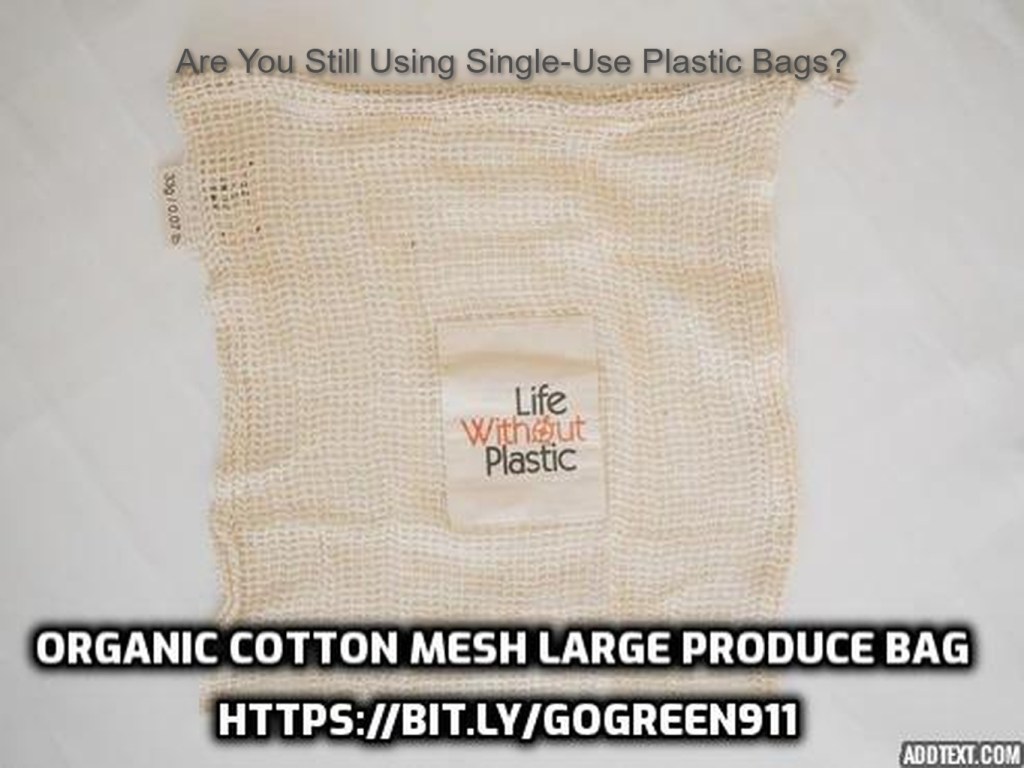
- Add a set of reusable produce bags, like an organic cotton mesh produce bag, clipped to your main tote so loose produce is covered too.
- Store a folded spare bag in your work bag, purse, or coat pocket for unplanned stops.
Step 3: Know Your Local Rules
Plastic bag policy varies significantly by location. Several states, including California, New York, and others that have joined more recently, have passed statewide bans or restrictions on single-use plastic bags. Checking your local rules once means you’re never caught off guard, and it often reveals that the “easy default” of plastic isn’t even available anymore in some areas, which can make the switch easier, not harder.
Step 4: Replace the Trigger, Not Just the Behavior
Habit researchers emphasize that lasting change usually requires replacing the cue-routine-reward loop, not just willing yourself to behave differently in the moment. Put your reusable bags somewhere you’ll see them before you leave the house: by your keys, on your doorknob, in your car’s driver seat. Let the visual cue do the work your willpower doesn’t have to.
Step 5: Forgive the Slip-Ups
If you forget your bags and end up with plastic anyway, that’s not a failure of the whole effort. It’s one data point in a much longer pattern you’re actively reshaping. Consistency over months matters far more than any single trip.
Which step feels like the missing piece for you, noticing the habit, building the new default, or knowing your local rules? Tell me below.
Watch this video: Are You Still Using Single-Use Plastic Bags? 5 Shocking Reasons to Switch Today!
Real Stories: People Who Finally Broke the Plastic Bag Default
I’ve adapted these stories from people in my own community, with names changed for privacy.
Marianne, 44, longtime “plastic” autopilot answerer: Once Marianne actually noticed how automatic her answer had become, she kept a set of reusable bags in her car permanently. A year later, she estimates she’s avoided hundreds of single-use bags.
The Okafor family, household of five: With five people grabbing bags on different errands, the family solved it by keeping reusable totes in every car and by the front door, removing the “I forgot” excuse from every possible angle.
Darnell, 38, recently relocated to a bag-ban state: Moving somewhere plastic bags weren’t even offered anymore forced a switch Darnell had been putting off for years. He told me it took exactly one week to stop missing them.
Priya, 29, apartment dweller without a car: Without a trunk to store bags in, Priya kept a foldable reusable bag in her everyday backpack instead, proving the habit works regardless of how you shop.
Harold, 61, self-described creature of habit: Harold assumed changing a decades-old habit at his age would be difficult. Framing it as “noticing an old default” rather than “forcing a new behavior” made the shift feel far more manageable than he expected.
Yuki, 33, budget-conscious shopper: Yuki worried reusable bags were an unnecessary expense. Doing the math, she realized a modest one-time cost for a durable set paid for itself in convenience within a few months, never mind the environmental case.
Have you had your own “checkout counter moment,” where you suddenly noticed a habit you’d been running on autopilot? Share your story in the comments below.
The Turning Point: Once You See the Default, You Can’t Unsee It
Here’s what happens almost every time someone actually stops and notices this habit the way Marianne did. The automatic “plastic” answer stops feeling automatic. It starts feeling like a choice, one that’s genuinely easy to make differently once reusable bags are just as available as the plastic ones used to be.
That’s the real turning point. This was never really about willpower. It was about visibility. Once the default becomes visible, replacing it with a better one, bags in the car, bags by the door, bags in your bag, turns out to be far easier than most people expect.
I’ve watched people like Marianne and Darnell go from quietly meaning to switch for years to actually switching within a single week, once the habit stopped running silently in the background. The hardest part was never the switch itself. It was noticing there was a choice to make at all.
Key Takeaways: Are You Still Using Single-Use Plastic Bags? Summarized
- Single-use plastic bags persist largely because they’re a default, not a conscious choice, and Americans use roughly 300 per person every year.
- Breaking a default habit works best by making it visible first, then building an even easier new default around it.
- Keeping reusable bags in your car, by your door, and in your everyday bag removes the moment of decision that keeps plastic winning by default.
- Many states and cities now restrict single-use plastic bags, so checking your local rules can simplify the switch considerably.
- Consistency over months matters more than any single forgotten trip, so slip-ups don’t undo your progress.
Take Action: Answer the Question Honestly, Then Change Your Answer
So, are you still using single-use plastic bags? If your honest answer was yes, you don’t need an elaborate plan to change that. You need one set of reusable bags and one place to keep them where you can’t miss them.
Today, put a set of reusable bags somewhere you’ll see them before you leave the house tomorrow, your car, your front door, your work bag. Notice how different your next checkout conversation feels.
Then come back and tell me how it went. Share your experience in the comments, ask questions if you’re building your own system, and share this post with a friend who might still be answering “plastic” on autopilot without realizing it.
This post is for general educational purposes about sustainable shopping habits.
Ready to finally break the plastic bag habit? Click HERE to find reusable mesh bags and practical tools built for exactly this switch.
Frequently Asked Questions About Single-Use Plastic Bags
Q1. How many plastic bags does the average person actually use in a year?
Estimates suggest Americans use roughly 300 single-use plastic bags per person annually, adding up to about 100 billion bags nationwide each year.
Q2. Are single-use plastic bags banned where I live?
It depends on your state and city. Several states have passed statewide restrictions or bans, while others have no restrictions at all. Checking your local government’s website is the most reliable way to find out.
Q3. What’s the easiest way to actually remember reusable bags?
Store them somewhere you’ll see before leaving the house, your car, your front door, or your everyday bag, so remembering them becomes automatic rather than something you have to consciously think about each time.
Q4. Are reusable bags really better for the environment than plastic?
A reusable bag used consistently for its full lifespan, often years, replaces hundreds of single-use bags. The environmental case strengthens the more consistently a reusable bag is actually used.
Q5. What if I forget my reusable bags sometimes?
That’s normal and doesn’t undo your progress. Focus on the overall pattern over months rather than any single trip where you ended up with plastic.
Q6. Do I need special bags for produce, or just for groceries overall?
Both help. A general reusable tote handles your overall grocery haul, while a dedicated reusable mesh produce bag replaces the thin plastic bags typically used for loose fruits and vegetables.
Q7. Is switching away from plastic bags expensive?
A set of reusable bags is a modest, one-time cost that typically pays for itself in convenience and durability within months, especially compared to bag fees in areas that charge for single-use plastic.
Q8. How long does it actually take to break the plastic bag habit?
Many people report that the shift feels largely automatic within a few weeks of keeping reusable bags accessible, though it varies by individual habit strength and consistency.
So, are you still using single-use plastic bags, honestly? Let me know in the comments, and share this post with someone who might still be answering “plastic” on autopilot.
For more readings on green living:
- Travel Sustainably: Benefits of Bamboo Utensils
- Why Bamboo Utensils Are Essential for Eco-Friendly Eating
- Switch to Bamboo Utensils for a Sustainable Future
- Why Bamboo Utensils Are Essential for Eco-Friendly Living
- Ultimate Guide to Sustainable Food Wraps
- Ditch Plastic Wrap: Embrace Vegan Wax Wraps Today
- Top 10 Reasons to Get A Stainless Steel Tumbler: Boost Your Hydration Game Anywhere
- Stainless Steel Tumbler: The Ultimate Guide to Sustainable Hydration
- Embrace Eco-Friendly Dining with the Stainless Steel Folding Spork
- Sustainable Shopping with Organic Cotton Flat-Bottom Bulk Bags
- The Benefits of Using Organic Cotton Mesh Bags for Storing Produce
- Beyond BPA: Why Choosing BPA-Free Stainless Steel Thermoses Matters
Click HERE to find reusable mesh bags and practical tools to reduce plastic in your routine