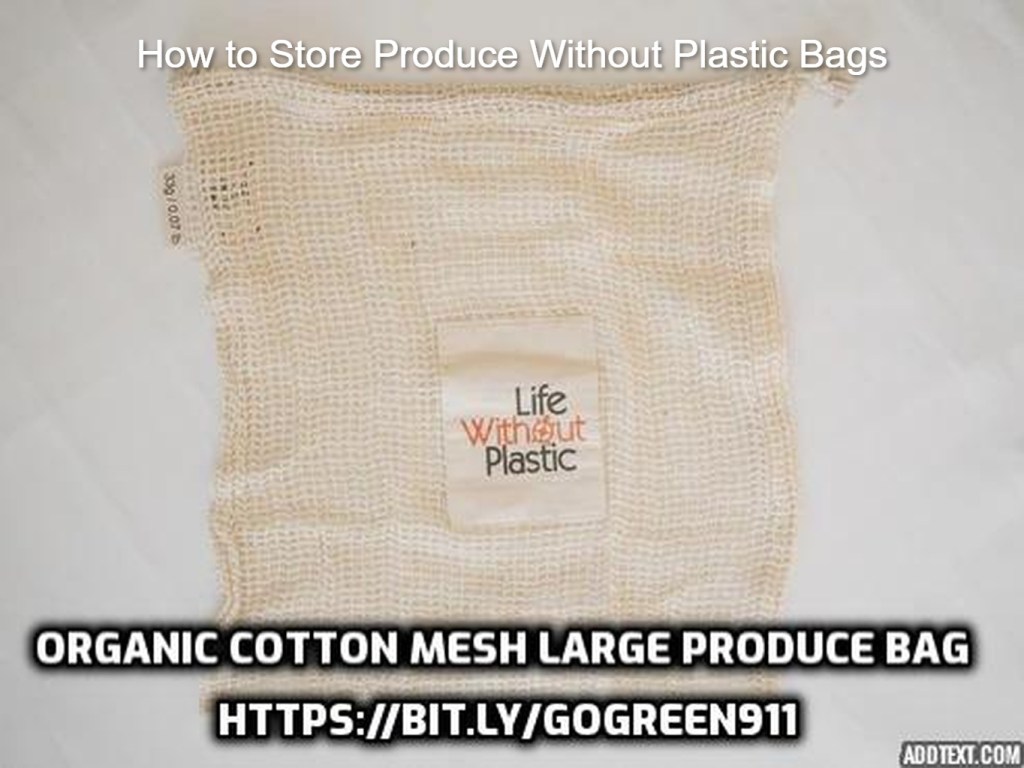
Click HERE to find reusable mesh bags and practical tools to reduce plastic in your routine
Your Fridge Is Quietly Wasting Food, and Plastic Isn’t Helping
I want to tell you about the Tuesday that changed how I shop for groceries.
I opened my crisper drawer and found a slimy bag of spinach, soft carrots, and a cucumber gone soft at one end. All of it still wrapped in the plastic bags I’d carried home from the store three days earlier. I hadn’t saved anything. I’d just delayed the trash by a few days and paid for the privilege in plastic.
Here’s the number that stopped me cold: the USDA estimates Americans waste 30 to 40 percent of the entire food supply, and fruits and vegetables consistently rank as the single highest-volume category of household food waste. The average family of four loses roughly $1,500 a year to food that never gets eaten. Plastic bags weren’t preventing that waste. They were often making it worse.
If you’re trying to build a plastic free kitchen and want your produce to actually last, this post is for you. Discover why plastic bags often shorten your produce’s life instead of extending it, learn exactly how to store vegetables without plastic and how to store fruits without plastic, and find out which reusable produce bags and methods genuinely keep food fresh. Let’s fix your crisper drawer for good.
The Problem: Plastic Bags Trap the Exact Thing That Spoils Produce
Here’s what nobody tells you at the checkout line. Sealed plastic traps moisture against your produce. Trapped moisture speeds up rot, not ripening. The bag that feels protective is often actively working against you.
There’s a second mechanism working alongside it. Many fruits and vegetables release ethylene gas as they ripen, and ethylene-sensitive produce decays faster when trapped near ethylene producers in a sealed environment, exactly what a tied plastic bag creates. A soft avocado next to broccoli in the same bag isn’t a coincidence. It’s chemistry.
This matters at scale. The USDA FoodKeeper program exists specifically because consumers are often unsure how to store food properly, and that uncertainty drives a huge share of what gets thrown away. Storage method isn’t a minor detail. It’s often the entire difference between a week of fresh produce and a trip to the trash.
Have you ever opened your crisper drawer to a surprise of spoiled produce you forgot was there? Tell me about your worst discovery in the comments.
There’s a third factor working against plastic, too, one that’s easy to miss. An opaque plastic bag hides what’s inside. Produce buried at the back of a drawer, invisible under a layer of crumpled bags, simply doesn’t get used before it turns. Switching to breathable, see-through storage doesn’t just slow spoilage directly. It also means you actually see what needs cooking tonight, which turns out to matter just as much.
The Pain Points: Why Plastic-Free Storage Feels Intimidating
Most people who want sustainable food storage run into the same obstacles:
- “Plastic-free” sounds like “spoils faster.” Most people have never seen the alternative actually work.
- Every vegetable seems to have different rules. Onions here, lettuce there, tomatoes somewhere else entirely.
- Humidity settings on the crisper drawer are a mystery. Most people have never touched that little slider.
- Forgetting what’s in the fridge drives real waste. Out of sight, out of mind, straight into the trash.
- Reusable alternatives feel like they require extra steps. Washing, drying, remembering which bag goes where.
Sound familiar? None of it means you’re bad at this. It means nobody ever taught you the actual rules, because plastic bags let you skip learning them, at the cost of your produce and your wallet.
The good news is that none of these rules require special equipment or a culinary degree. They require knowing four or five patterns and applying them consistently, which is a far lower bar than it first appears.
The Solution: How to Store Produce Without Plastic Bags
Let me walk you through the real system, by storage zone.
Rule 1: Match Humidity to Produce Type
Your crisper drawers aren’t decorative. Extension research confirms that high-humidity drawers suit broccoli, Brussels sprouts, carrots, cauliflower, green onions, strawberries, and leafy greens, while low-humidity drawers suit most fruits and vegetables prone to rot, like mushrooms and peppers. Check your fridge manual once, set it correctly, and stop guessing.
Rule 2: Separate Ethylene Producers From Ethylene-Sensitive Produce
Keep these apart, in the fridge and on the counter:
High ethylene producers: apples, avocados, bananas, melons, peaches, pears, tomatoes
Ethylene-sensitive produce: leafy greens, broccoli, carrots, cucumbers, lettuce, peppers, berries
Store producers in their own basket or bag. Never group them with sensitive produce, which can decay up to 50 percent faster when exposed.
Rule 3: Choose the Right Plastic-Free Method for Each Zone
For most fridge produce, use organic cotton mesh bags. Breathable organic cotton produce bags let excess moisture escape instead of trapping it, which is exactly what most vegetables and many fruits need. Root vegetables, apples, citrus, and sturdy greens all do well here.
For highly ethylene-sensitive leafy greens, use a damp cloth or a container instead. Here’s an honest nuance worth knowing: mesh bags are breathable by design, which means they don’t block ethylene gas from reaching sensitive greens if they’re stored near producers. For spinach, kale, or herbs that are especially sensitive, wrap them loosely in a slightly damp tea towel, or use a container, and keep them away from your ethylene producers entirely.
For pantry produce, skip the fridge altogether. Potatoes, onions, garlic, and winter squash belong in a cool, dark, well-ventilated spot, not sealed in anything. A breathable basket or an open cotton bag works perfectly.
For fresh herbs, try the glass-of-water method. Trim the stems and stand herbs upright in a jar with an inch of water, loosely covered, like a bouquet. No bag required.
For cut produce, use a reusable container instead of plastic wrap. A glass container with a lid keeps cut produce fresh without a single piece of cling film.
Rule 4: Make Your Produce Visible
Storing food in clear containers helps you see what you have and avoid rebuying what’s already there, according to USDA guidance. An organic cotton mesh bag works well here too, since you can see exactly what’s inside without opening it.
Which of these rules surprised you most? Tell me below, and I’ll help you apply it to your specific fridge setup.
Ready to stock your crisper drawer the plastic-free way? Shop organic cotton mesh produce bags built for real storage, not just the checkout line. [Click to learn more.]
Watch this video: Want Fresher Produce? Learn How to Store Produce Without Plastic Bags at Home
Real Kitchens, Real Results: Plastic-Free Storage Stories
I asked readers how this actually played out once they rebuilt their storage system.
Nadia, working mom of two, Minneapolis: Nadia’s biggest win was the ethylene rule. Separating her fruit bowl from her vegetable crisper stopped her lettuce from going slimy within two days, something she’d blamed on “bad luck” for years.
Desmond, retired engineer, Phoenix: Desmond treated this like a systems problem, labeling his crisper drawers and testing humidity settings methodically. His produce waste, tracked in a simple notebook, dropped by more than half within a month.
The Alvarez family, three generations, San Antonio: Grandmother, parent, and teenager split storage duties by zone. The grandmother’s glass-of-water herb trick, something she’d done for decades, finally had a name the rest of the family understood.
Priya, graduate student, Chicago: With a tiny fridge and no crisper drawer to speak of, Priya relies entirely on mesh bags and a cool pantry corner for onions and potatoes. Her produce now outlasts her grocery budget cycle.
Harold, widower, rural Vermont: Cooking for one meant constant small-batch waste. Switching root vegetables to breathable cotton storage in a cool mudroom let him buy slightly larger quantities without losing half to rot.
Fatima, caterer, Dallas: At commercial scale, ethylene separation made the biggest visible difference. She now trains her kitchen staff on the same high-humidity and low-humidity rules from this post.
Has reorganizing your fridge ever changed how much food you actually use before it spoils? Share your experience in the comments.
The Turning Point: Storage Is a System, Not a Single Trick
Here’s the shift that makes this stick.
Plastic bags let you skip understanding your produce entirely. One bag, one method, for everything, regardless of whether it helps or hurts. That convenience came at a real cost, both in spoiled food and in plastic waste.
Once you understand the actual mechanisms, trapped moisture, ethylene exposure, humidity mismatch, you stop guessing and start managing. The right method for carrots is different from the right method for strawberries, and that’s not complexity for its own sake. It’s precision that plastic never offered you in the first place.
This is the moment plastic free kitchen stops meaning “more effort” and starts meaning “actually effective,” often for the first time.
I think about it the way I think about any skill that looks complicated from the outside and simple once you understand the underlying logic. Nobody memorizes humidity settings and ethylene pairings overnight, but you don’t need to. You need the two or three rules in this post, applied consistently, and within a couple of grocery cycles they stop feeling like rules at all. They just become how you put your groceries away.
Key Takeaways: Storing Produce Without Plastic Bags
- Sealed plastic traps moisture, which often accelerates rot rather than preventing it.
- Separate ethylene-producing fruit from ethylene-sensitive vegetables, in the fridge and on the counter.
- Use breathable organic cotton mesh bags for most produce, and containers or damp cloths for highly ethylene-sensitive greens.
- Match your crisper drawer’s humidity setting to what you’re storing: high humidity for leafy greens, low humidity for fruit.
- Visible, see-through storage reduces the “forgotten produce” waste that drives a huge share of household food loss.
A little system beats a lot of plastic, every single time.
Take Action: Rebuild Your Crisper Drawer This Week
You don’t need to overhaul your whole kitchen today. You need one drawer and twenty minutes.
This week, empty your crisper drawers, check your humidity settings, and reorganize using the ethylene and humidity rules above. Swap in organic cotton mesh bags for whatever you’d normally wrap in plastic.
Then come back and tell me what you found hiding in the back of your fridge. Share your before-and-after in the comments, ask about any specific produce that’s stumped you, and share this post with someone who’s still finding slimy bags in their crisper drawer every week.
Frequently Asked Questions About Plastic-Free Produce Storage
Q1. How do I keep lettuce fresh without a plastic bag?
Wrap it loosely in a slightly damp cloth, or store it in a container, in your fridge’s high-humidity drawer, away from ethylene-producing fruit like apples and bananas.
Q2. Can I use the same mesh bag for all my produce?
Mostly, yes, for sturdy fruits and vegetables. For highly ethylene-sensitive leafy greens, a damp cloth or container works better since mesh doesn’t block ethylene gas from nearby producers.
Q3. What produce should never go in the refrigerator?
Potatoes, onions, garlic, and winter squash do best in a cool, dark, well-ventilated pantry space, not the fridge.
Q4. Why does my produce still spoil fast even without plastic?
Check your ethylene pairings first. Storing apples or bananas near leafy greens or other sensitive produce accelerates spoilage regardless of what bag or container you use.
Q5. How long do organic cotton produce bags actually last?
With regular machine washing, quality organic cotton mesh bags can last several years of consistent use.
Q6. Should fruits and vegetables be stored separately?
Generally yes, since most fruits produce more ethylene than vegetables, and many vegetables are ethylene-sensitive. Separate bins or bags for each reduce cross-exposure.
Q7. What’s the best way to store fresh herbs without plastic?
Trim the stems and stand them in a jar with a little water, loosely covered, the same way you’d display cut flowers.
Q8. Does washing produce before storing it help or hurt?
Wash most produce just before you use it, not before storing, since extra moisture on the surface can accelerate spoilage in the fridge.
What’s the one piece of produce you can never seem to keep fresh? Ask me in the comments, and share this post with someone who’s ready to swap their crisper drawer chaos for a system that actually works.
For more readings on green living:
- Travel Sustainably: Benefits of Bamboo Utensils
- Why Bamboo Utensils Are Essential for Eco-Friendly Eating
- Switch to Bamboo Utensils for a Sustainable Future
- Why Bamboo Utensils Are Essential for Eco-Friendly Living
- Ultimate Guide to Sustainable Food Wraps
- Ditch Plastic Wrap: Embrace Vegan Wax Wraps Today
- Top 10 Reasons to Get A Stainless Steel Tumbler: Boost Your Hydration Game Anywhere
- Stainless Steel Tumbler: The Ultimate Guide to Sustainable Hydration
- Embrace Eco-Friendly Dining with the Stainless Steel Folding Spork
- Sustainable Shopping with Organic Cotton Flat-Bottom Bulk Bags
- The Benefits of Using Organic Cotton Mesh Bags for Storing Produce
- Beyond BPA: Why Choosing BPA-Free Stainless Steel Thermoses Matters
Click HERE to find reusable mesh bags and practical tools to reduce plastic in your routine