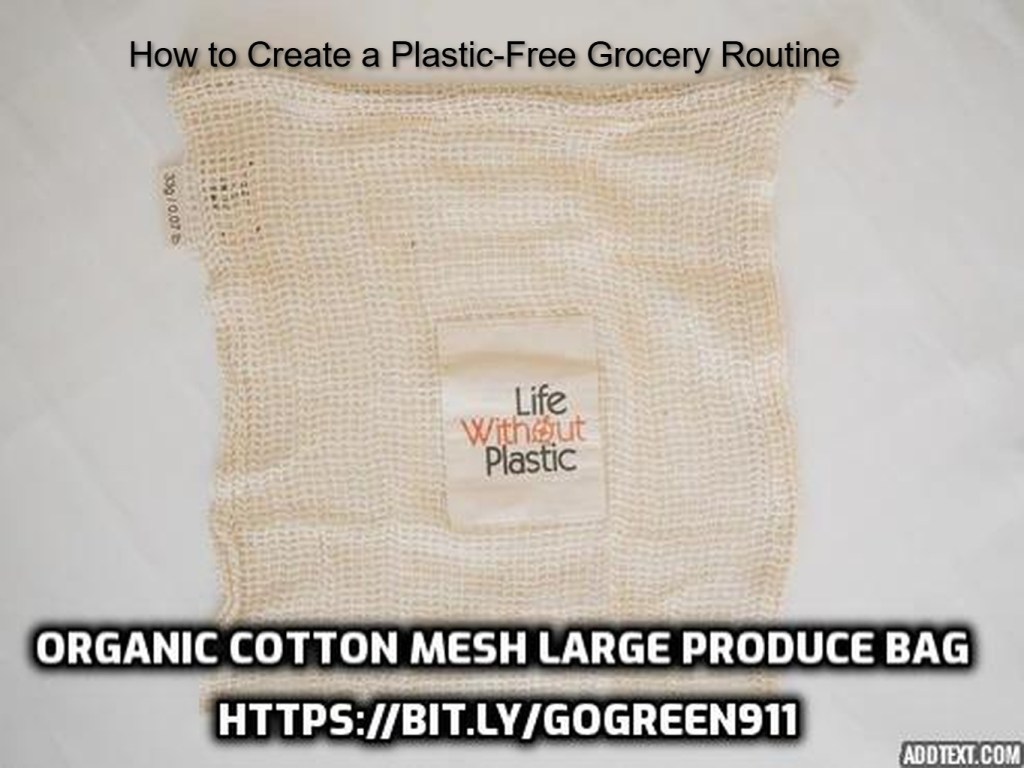
Your Grocery Cart Is the Easiest Place to Quit Plastic
I want to tell you about the moment this clicked for me.
I was standing in the checkout line behind a woman named Carol, who I later learned volunteers at a beach cleanup every month. She had one reusable tote for her groceries, and inside it, eleven plastic produce bags. She saw me looking, laughed, and said, “I know. I bring the big bag and then grab all the little ones anyway.”
That’s the gap nobody talks about. Most of us solved the checkout bag years ago. The produce aisle is still winning.
Here’s a number that reframed it for me: a 2024 report from Environment America and U.S. PIRG found that well-designed plastic bag bans eliminate roughly 300 single-use bags per person per year. Three hundred bags. Per person. That’s what’s sitting in your grocery routine right now, waiting to be removed.
If you’re serious about plastic free living and want a system that actually holds up week after week, this post is for you. Discover how to walk your store aisle by aisle without touching a single plastic bag, learn what makes an organic cotton mesh produce bag genuinely different from cheap alternatives, and find out how to build a plastic free shopping routine that survives a rushed Tuesday evening. Let’s shop.
The Problem: The Produce Aisle Is the Last Plastic Holdout
Think about where plastic actually enters your kitchen.
Not the checkout. You fixed that. It’s the roll of flimsy bags hanging above the apples, the one you tear off without a conscious thought. Six per trip. Fifty-two trips a year.
The scale of what’s at stake is genuinely encouraging, though. Bans in just five US states and cities covering 12 million people cut single-use plastic bag consumption by about 6 billion bags annually, enough to circle the earth 42 times.
But here’s the thing. You don’t need to wait for legislation. A peer-reviewed study published in Science in 2025, analyzing 40 years of Ocean Conservancy cleanup data, found bag policies reduce plastic bags in the environment by 25 to 47 percent. Policy works because behavior works. Your behavior counts the same whether a law prompted it or you did.
There’s a second reason the produce aisle deserves your attention first. Those thin bags are among the least recoverable plastics in the waste stream. They jam sorting machinery at recycling facilities, which is why most curbside programs refuse them outright. A bag you put in the blue bin in good faith often ends up landfilled anyway, or pulled out by hand. Not using one in the first place is the only reliable outcome.
How many plastic produce bags do you think you used on your last shop? Be honest in the comments — I’ve heard numbers that would surprise you.
The Pain Points: Why the Produce Aisle Defeats Good Intentions
I’ve talked to a lot of people about this, and the obstacles are remarkably consistent:
- The bags are already in your hand before you think. Grabbing a plastic bag is muscle memory, not a decision.
- Your reusable set is in the car. Or the hall closet. Or the wash. Availability beats intention every time.
- You’ve been burned by flimsy mesh. A bag that splits over the kale once teaches you never to trust it again.
- You don’t know what to do at the register. Unfamiliar bags on a scale feel awkward the first time.
- Loose items feel impossible. Green beans, Brussels sprouts, cherries — these are the ones people give up on.
Any of these sound familiar? Every one has a fix, and none of them require heroics.
Notice what’s missing from that list, though: caring. Nobody on it lacks motivation. They’re all people who already want to reduce single use plastic and keep hitting friction anyway. That’s worth naming, because the usual advice tells you to try harder. Trying harder isn’t the problem. The setup is.
The Solution: A Plastic-Free Grocery Routine, Aisle by Aisle
Rather than giving you general principles, let me walk you through an actual store.
The Produce Section
This is where organic cotton produce bags earn their keep. Bring a full set, not two.
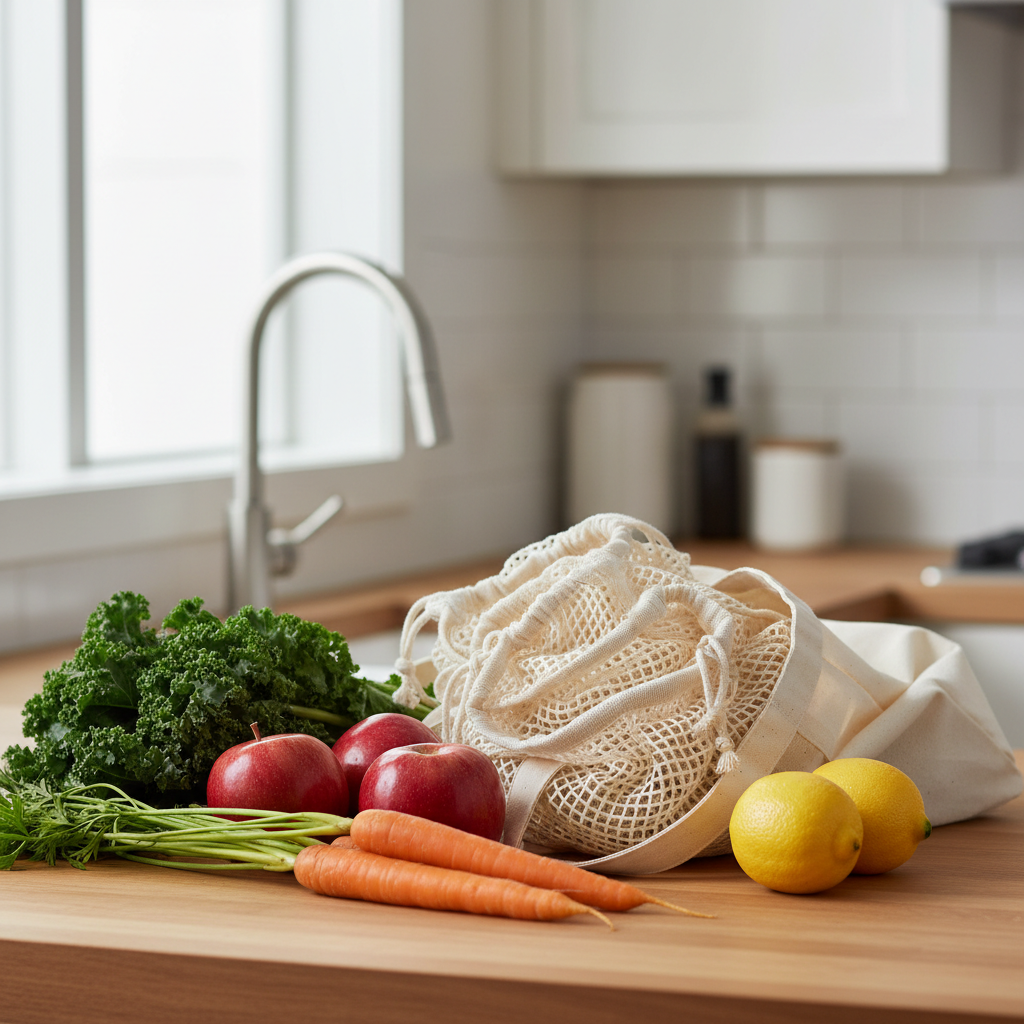
- Leafy greens and herbs: Mesh breathes, which is exactly what greens need. Plastic traps moisture and accelerates rot.
- Loose small items (beans, sprouts, cherries, mushrooms): A drawstring or toggle closure matters most here. Test it before you trust it.
- Root vegetables and squash: These are heavy. Reinforced seams are non-negotiable.
- Single large items (a melon, a cabbage, a bunch of bananas): Skip the bag entirely. It doesn’t need one.
The Bulk Bins
Bring your mesh bags for grains, nuts, dried fruit, and pasta. Fine flours and powders do better in a jar or tin.
Ask the cashier to note the tare weight, or look for bags with the weight printed on the tag.
The Bakery
Bread goes straight into a cotton bag. Here’s a bonus: cotton mesh grocery bags keep crusty bread genuinely better than plastic, which turns a good crust soft overnight.
The Deli and Butcher Counter
Many counters will accept a clean container you hand over. Some won’t, for health-code reasons. Ask once. If the answer is no, that’s a store policy, not a personal failure.
The Checkout
Hand your bags over open, weight tag visible. Say “these are my own bags, the tare is on the tag.” Three seconds. After the second trip, nobody blinks.
Which aisle trips you up the most? Tell me below and I’ll dig into specific workarounds.
What Makes an Organic Cotton Mesh Bag Worth It
Not all reusable produce bags are equal, and the differences matter more than the price.
- Organic cotton over synthetic mesh. Polyester and nylon mesh shed microplastics in the wash. Buying a plastic bag to avoid a plastic bag misses the point.
- Certified organic over conventional cotton. Conventional cotton farming accounts for 16 to 25 percent of global insecticide use despite covering a small share of farmland. Organic skips those chemicals and can cut water use by up to 91 percent.
- Reinforced seams and a real closure. The two failure points on every cheap bag.
- Machine washable. If you can’t wash it easily, you won’t use it for food.
- Large sizes. Small bags mean you still reach for plastic on the big stuff.
One honest caveat, because I’d rather you trust me than be sold to: reusable bags carry a higher production footprint per unit than a single plastic bag. They win on repeated use, decisively, over hundreds of trips. Buy a set that lasts and actually use it. Buying five sets you never use is worse than buying one you do.
Ready to build your set? Browse organic cotton mesh produce bags and start with your next shop.
Watch this video: Ready to Ditch Single-Use Plastic? Organic Cotton Mesh Produce Bag – How to Create a Plastic-Free Grocery Routine
Real Shoppers, Real Routines: Plastic-Free Grocery Stories
I asked readers to share how this actually went for them.
Carol, beach cleanup volunteer, Charleston: The woman from my checkout line. She now keeps eight mesh bags inside her tote permanently, so the little bags travel with the big one. Her plastic count last month: zero.
Nico, restaurant line cook, Chicago: Shopping after a 12-hour shift meant zero patience for extra steps. Nico keeps his bags clipped to his backpack strap. “If it’s not on me, it doesn’t happen.”
The Haddad family, four kids, Detroit: Weekly shops are enormous. They color-coded their bags by category so the kids could help sort produce without asking questions.
Bernadette, 71, retired postmaster, rural Vermont: Her small-town store had never seen reusable produce bags. She brought a printed tare-weight card the first three visits. Now the cashiers recognize her bags on sight.
Theo, graduate student, Austin: Living on a stipend, Theo tracked the math. One set of durable bags replaced what he estimated at 250 plastic bags over an academic year.
Marisol, farmers market regular, San Diego: Market vendors were already on board. Her shift was extending the habit to her regular supermarket, where the defaults push back harder.
Has a small habit ever spread to other parts of your life once it stuck? I’d love to hear about it below.
The Turning Point: Defaults Beat Willpower
Here’s the reframe that makes this stick.
Plastic bag bans work not because they change minds, but because they change defaults. When the plastic isn’t there, people adapt within weeks. Faye Park, president of the U.S. PIRG Education Fund, put it plainly: people realize quickly that it’s easy to live without plastic bags and get used to bringing a bag from home.
You can create that same default in your own life without waiting for a law.
Put the mesh bags where your hand already goes. Inside the tote. On the door handle. Clipped to the backpack. Make the sustainable choice the lazy choice, and willpower becomes irrelevant.
That’s the whole trick. Not discipline. Design.
And the ripple goes further than your own cart. Every time you hand mesh bags to a cashier, you make the behavior visible to the person behind you in line, the way Carol’s eleven plastic bags were visible to me. Normal is contagious. Bans work partly because they make reusables ordinary, and you can make them ordinary in your own store a few weeks ahead of any legislation.
Key Takeaways: Your Plastic-Free Grocery Routine
- The produce aisle is where most household grocery plastic still enters, even for people who solved the checkout bag.
- Well-designed bag policies eliminate roughly 300 single-use bags per person annually — that’s your personal opportunity.
- Shop aisle by aisle: mesh for produce and bulk, cotton for bread, containers where the counter allows.
- Choose certified organic cotton with reinforced seams over synthetic mesh, which sheds microplastics.
- Reusables win through repeated use, so buy one good set and use it hard rather than collecting several.
- Change your defaults, not your willpower. Store the bags where your hand already reaches.
Take Action: Start With Your Next Shop
You don’t need a perfect zero waste kitchen. You need bags by the door.
Before your next grocery trip, put a full set of organic cotton mesh produce bags inside the tote you already carry. Not the closet. Inside the bag you’ll definitely bring.
Then come back and tell me how the produce aisle went. Share your plastic count in the comments, ask about any aisle that stumped you, and share this post with someone who’s still tearing bags off the roll. Carol did, and her whole cleanup crew switched.
Frequently Asked Questions About Reusable Produce Bags
#1. Do cashiers actually accept your own produce bags?
Nearly always. Most registers subtract the tare weight, especially if it’s printed on the tag. Say so when you hand them over.
#2. How many mesh produce bags do I need?
Most households do well with 6 to 10 large bags, enough to cover produce, bread, and bulk bins in one trip without running short.
#3. Does produce last as long in cotton mesh as in plastic?
For most items, longer. Mesh breathes, so greens and mushrooms don’t sit in trapped moisture. Store cut produce in a container in the fridge as usual.
#4. Are organic cotton bags really better than synthetic mesh?
Yes, on two counts. Synthetic mesh sheds microplastics in the wash, and organic cotton avoids the pesticide and water burden of conventional cotton farming.
#5. How do I wash reusable produce bags?
Machine wash cold in a laundry bag, then air dry or tumble low. Wash after any shop where they carried unwashed produce or leaked.
#6. Are reusable bags actually better for the environment if they take more to produce?
Over their lifetime, yes, decisively. The break-even comes quickly with regular use, which is why buying one durable set and using it for years matters more than the initial purchase.
#7. What about meat, fish, and deli items?
Policies vary by store. Many counters accept a clean container you provide. Ask once, and respect the answer if health codes prevent it.
#8. What’s the single best first step if I’m just starting?
Put the bags inside the tote you already carry. Availability, not intention, is what determines whether you use them.
What’s the one grocery item you can’t figure out how to buy plastic-free? Ask me in the comments, share this post with a friend who shops the way you used to, and let’s close the produce-aisle gap together.
For more readings on green living:
- Travel Sustainably: Benefits of Bamboo Utensils
- Why Bamboo Utensils Are Essential for Eco-Friendly Eating
- Switch to Bamboo Utensils for a Sustainable Future
- Why Bamboo Utensils Are Essential for Eco-Friendly Living
- Ultimate Guide to Sustainable Food Wraps
- Ditch Plastic Wrap: Embrace Vegan Wax Wraps Today
- Top 10 Reasons to Get A Stainless Steel Tumbler: Boost Your Hydration Game Anywhere
- Stainless Steel Tumbler: The Ultimate Guide to Sustainable Hydration
- Embrace Eco-Friendly Dining with the Stainless Steel Folding Spork
- Sustainable Shopping with Organic Cotton Flat-Bottom Bulk Bags
- The Benefits of Using Organic Cotton Mesh Bags for Storing Produce
- Beyond BPA: Why Choosing BPA-Free Stainless Steel Thermoses Matters